Search This Blog

Friday, August 8, 2008

The Greatest Show on Earth


I’m writing this in the middle of the live telecast of the Olympic Games ceremony, just after the Philippines took its turn in the parade of nations.

I’m sure there’s still more extravaganza coming, but just from the initial salvo, I’m already convinced that China has just shown the world how to rock! This summer Olympiad’s opening ceremonies could arguably be the grandest in history - one that will forever be remembered for its dazzling display of intricate choreography, enchanting lights and impeccable artistry.

I admit my vocabulary will not be enough to describe the superlatives that should aptly describe the event. For those who have seen it, you surely know what I mean. Let me just put it then as simply AWESOME!

I can't wait for the games to begin

(pics downloaded from Yahoo!)

Tuesday, August 5, 2008

Namsangol Hanok Village


Right in the heart of Seoul is a reservation featuring traditional Korean communities. It is called the Namsangol Hanok Village or the Korean Folk Village – a must-see place, even on a tight schedule (bus rides are readily available from wherever in the city).


Most of the structures standing there now are but recreations of the originals, but they were expertly built to possess the aura of antiquity. It’s actually much like the Nayong Pilipino we once had in Paranaque, only that it is focused on just one theme – the life of Korean ancestors. The pavilions (houses of Korean royalty), ponds and gardens inside the park were so made to look like the ones built years ago in the valleys surrounding Namsan Mountain (the mountain hosting much of Seoul).

(Shy me. He he. Idol si Coldman!)

Wondering where Jumong was shot? I’m guessing, but I can’t help but think that some scenes were shot there. Bet? Well, maybe not Jumong, but for sure, some of the Korean period teledramas we see on TV had this place as setting.

Friday, August 1, 2008

Seoul: Some Impressions

I guess I now know why Koreans love living in the Philippines.

Aside from the fact that it is the place where they could learn the best English from within the Asian neighborhood and at the cheapest possible price, there’s just something in Seoul that makes it homey. I don’t know, but from my perspective, Seoul somehow looks and feels like Manila!
Of course, it’s far more advanced in many ways, but not the entire Seoul is as cosmopolitan as say, Hongkong, Singapore or Tokyo. It’s sidestreets are just as narrow and crowded as Paco’s, the shops are just as flamboyant and dazzling as Cubao's and the malls are just as huge and as multi-purpose as SM or Greenbelt.

Transportation? The taxi fares are quite of the same range, but there are more available units around. Traffic is as bad during rush hours. But there are more train lines (though not comparable to Tokyo’s).

Cleanliness? Yes, some garbage is strewn in the less-upscale side of town (not as much as Manila’s of course). I passed through one underpass though, and it was as littered as that one in Lawton (if you know what I mean. Bwaarrrrrk!)

Nway, the pictures I'm featuring here could explain my thoughts better.


* * * * * *
Here’s one moment that warmed my heart - something that would forever remind me of Seoul:

I met this taxi driver in one of my rides. Hoping to strike a conversation, he tried talking to me in halting, fractured and barely recognizable English. When he learned that I came from the Philippines, he became more interested. He asked if all Filipinos speak really good English as I did (ehem). I just smiled. I told him I taught English to Korean students many years back.

Then, his face lightened like he just had a eureka moment! “Filipin! Yes Filipin! Akilar!” I tried to figure out what he meant, but I couldn’t. “Sing!”, he said, and proceeded to singing the Korean lyrics of an all-too-familiar Pinoy ditty. It was “Anak” by Freddie Aguilar. In between his singing, or whatever you’d call his mumblings, he said that Freddie Aguilar was very famous in Korea in the 80’s and the Korean version of Anak, at one time, became number one on Seoul radio.

As I got off his taxi, I could help but have this infectious smile pasted on my glowing face. I capped the day with a bottle of beer to celebrate.

Wednesday, July 30, 2008

Korea War Memorial - Seoul

Having been exposed to the horrors of destructive conflict not just against other countries during World War II but also against brothers from the other Korea during its internal territorial dispute (which of course, hounds them still to-date), South Korea consciously preaches adherence to peace. To symbolize this cause, it built a War Memorial that displays military armaments, depicts war scenes and honors the souls of those whose lives were lost in the process.

I was just so glad my early morning walk led me to the place.

(a depiction of a Father returning to the arms of a longing son after the war)

(a marker for Filipino soldiers who died in Korea)

Monday, July 28, 2008

Somewhere in Seoul

Am now in Seoul, So. Korea. For work, of course.

Quite busy, but I'll try finding time to post.

See ya all later!

Thursday, July 24, 2008

Nagoya Castle and Atsuta Shrine

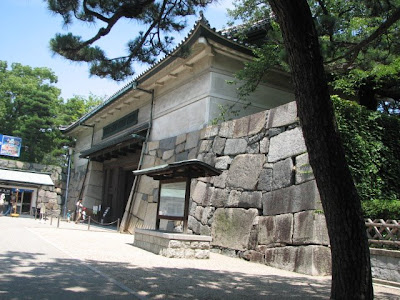
I checked out the Wikipedia entry on Nagoya and found out that it cites two sites as the City’s most famous tourist destinations: the Nagoya Castle and the Atsuta Shrine. Thanks to my wonderful hosts, I was able to visit both.

The entry says: “ Nagoya Castle was built in 1612. Although a large part of it burned down in the fires of World War II, the castle was restored in 1959, adding some modern amenities such as elevators. The castle is very famous for two magnificent Golden Orca (a type of fish) on the roof, often used as the symbol of Nagoya.” (the moat the back of the castle

(the view from the top of the castle)

There were so many displays inside the castle . These were either descriptive of how the original structure was built -

Or many historical artifacts like this samurai armour -Or a replica of the "golden dolphin" adorning the building's roof (which this foreigner had a grand time posing with) -


"Atsuta Shrine is known as the second-most venerable shrine in Japan, after Ise Shrine. It is said to enshrine the Kusanagi sword, one of the three imperial regalia of Japan. It holds around 70 festivals in a year, and many people visit the shrine year-round. Also, the shrine has over 4,400 national treasures representing its 2,000 years' history.”

(the entrance gate where everyone has to pash thru: no passing from the sides)

(the cleansing well: visitors must must their hands or feet here before they proceed to the temple)

(the temple itself - throw a coin, then pray)


(the hall where elaborate Japanese weddings are held)

(the longest sword in the world)

Monday, July 21, 2008

Nagoya on a Sizzling Summer Day

I spent my weekend in Japan’s third largest metropolitan region, the center of which is the City of Nagoya. It is 262 kilometers out of Tokyo and the fastest and most convenient mode of transport (which I took) is via the Nozomi or bullet train which takes about an hour an a half of first class travel.

I tried checking out the city despite the sweltering 37 degree summer heat.

Below are some of the photos I took of the city’s downtown which features the Nagoya Tower (a tv tower) and the Central Park (said to be inspired by New York’s). (The Nagoya Tower and Fountain)

(view from the top of the Nagoya Tower)

(Scenes at the Central Park)

("sake" drums used as decor in a sumo wrestling venue)

(plates of couples who were wedded atop the Nagoya tower)


(and the bullet train back to Tokyo)